
Comment donner envie de s’habiller éthique et durable ?
38 149 participants 1 680 propositions 481 156 votes Consultation du 19 février 2026 au 16 avril 2026
Dans un monde en mutation rapide, les changements positifs et durables ne peuvent se construire que grâce à l'engagement massif. Nous donnons les moyens aux citoyens, aux collaborateurs et à toutes les parties prenantes de participer, grâce à des outils en ligne et à des méthodologies de collaboration innovantes.

En période d’incertitude, nos démocraties font face à des défis croissants pour répondre pleinement aux attentes des citoyens et renforcer la cohésion sociale. Make.org propose des solutions innovantes permettant aux institutions publiques et aux organisations à but non lucratif d’impliquer efficacement les citoyens à grande échelle. Nous les accompagnons à des étapes clés, des élections à l’élaboration des politiques publiques et législatives, favorisant ainsi une action collective partagée par tous.


Les entreprises font face à une complexité croissante et à un désengagement des employés et des clients. S’adapter aux évolutions géopolitiques, environnementales et technologiques actuelles exige de nouvelles approches. Make.org propose des solutions innovantes pour impliquer massivement les parties prenantes (collaborateurs, clients, grand public...) dans les processus stratégiques, opérationnels et RSE. En favorisant l’alignement et l’appropriation collective, nous aidons les entreprises à s’adapter rapidement et efficacement.


La recherche en IA est essentielle pour garantir que l’intelligence artificielle reste une force positive au service de la démocratie et de la société. Make.org relève ce défi en développant des plateformes spécialisées permettant de collecter et de fournir des données hyper-qualifiées, adaptées aux besoins spécifiques des différentes étapes de la recherche. De plus, Make.org a mis en place des programmes de recherche dédiés visant à aligner le développement de l’IA sur les valeurs démocratiques et les besoins sociétaux.


38 149 participants 1 680 propositions 481 156 votes Consultation du 19 février 2026 au 16 avril 2026

11 661 participants 649 propositions 121 325 votes Consultation du 18 septembre 2024 au 4 novembre 2024

19 668 participants 678 propositions 276 734 votes Consultation du 13 décembre 2022 au 7 février 2023

49,432 participants 1,830 propositions 334,429 votes Consultation du 10 mai 2021 au 20 juin 2021
Ouverture dans un nouvel onglet.jpg)
Across Europe, access to secure, adequate and affordable housing remains a major challenge. The EU-CIEMBLY Transnational Dialogue invites citizens to share their experiences and ideas on housing inequality, helping shape a European Citizens’ Assembly and explore more inclusive solutions.
Lire l'articleOuverture dans un nouvel onglet
Panoramic for EuroPCom 2026 is now live to revisit European public communication debates organised by the European Committee of the Regions.
Lire l'articleOuverture dans un nouvel onglet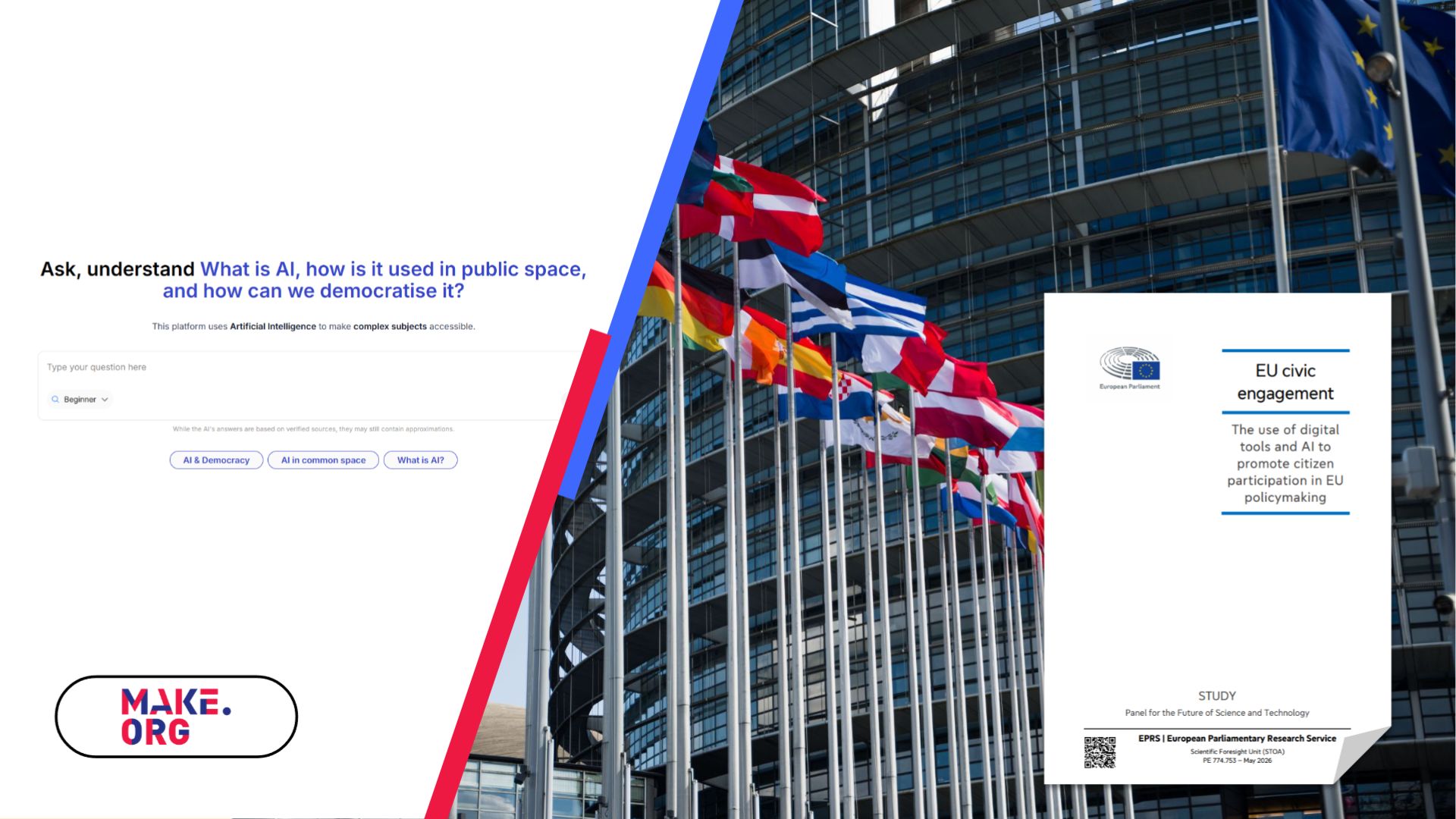
Earlier this year, the European Parliamentary Research Service (EPRS) published a study on EU Civic Engagement – The Use of Digital Tools and AI to Promote Citizen Participation in EU Policymaking. In their analysis, Panoramic was recognised as one of the emerging AI tools that meaningfully involve citizens in policymaking.
Lire l'articleOuverture dans un nouvel onglet